
PROMUSICAE TAKES PART IN THE DAY ON CULTURE HELD IN CACERES ON THE OCCASION OF THE INFORMAL MEETING OF MINISTERS ON THE SPANISH EU PRESIDENCY
02-10-2023
The day of meeting among professionals and experts of different culture spheres, hosted by the Fundación Alternativas with the collaboration of the Cáceres Provincial Council and carried out in the city of Cáceres on 26th September 2023 coinciding with the informal meeting of Ministers of Culture of the EU (IMM), has raised key issues for the development of the sector.

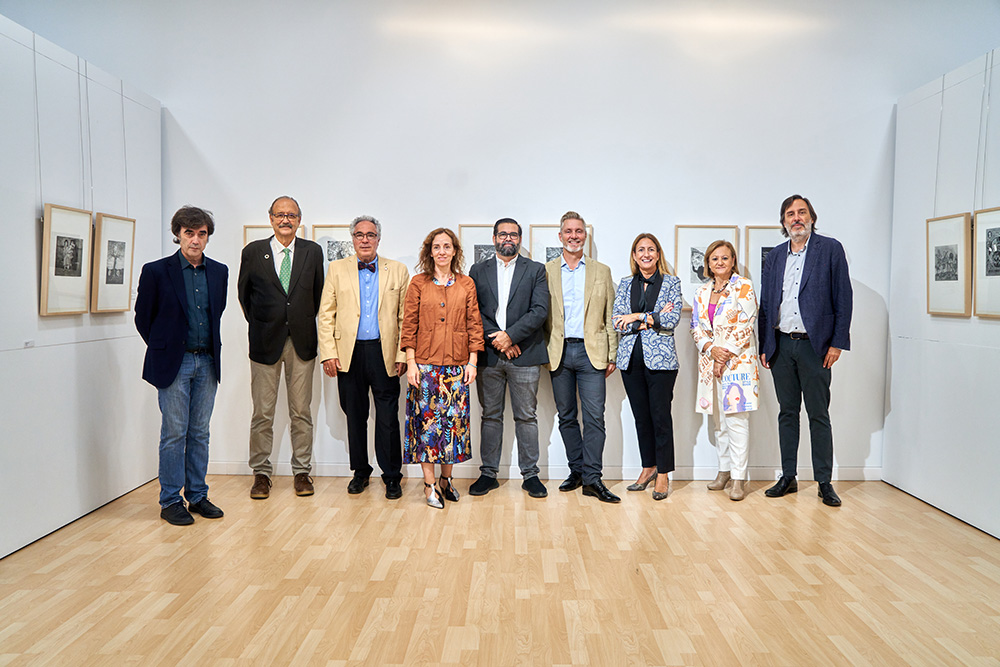
Footer: Rigth to left: Gonzalo Carrión from producer El Ranchito, Antonio Guisasola President of PROMUSICAE, Inma Ballesteros, Director of the Observatory of Culture of Fundación Alternativas, Cristina Gallach, Commissioner for the New Economy of Language PERTE; Tomás Fernando Flores Director of Radio 3 and Peter Welter from Profilm.
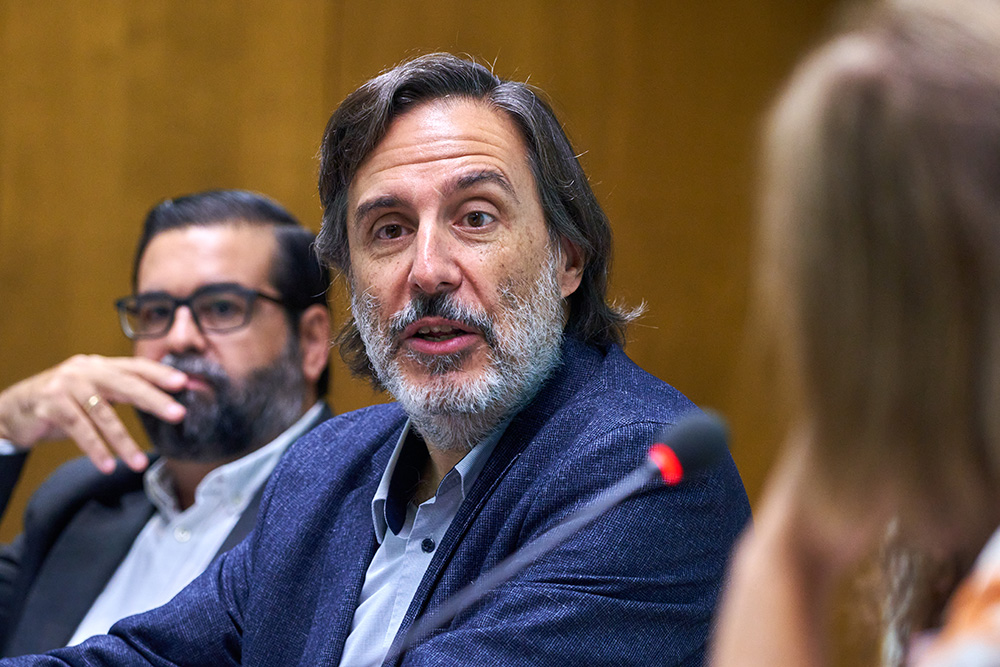
The day of meeting among professionals and experts of different culture spheres, hosted by the Fundación Alternativas with the collaboration of the Cáceres Provincial Council and carried out in the city of Cáceres on 26th September 2023 coinciding with the informal meeting of Ministers of Culture of the EU (IMM), has raised key issues for the development of the sector. PROMUSICAE president, Antonio Guisasola, took part in the first of panels, "Cultural industries in the European Union agenda".
Down below, are shown the conclusions reached:
Taking as reference the IMM slogan 'Culture as a key public asset', we identify as a historic moment the recognition of the ministers of the EU. Following many years of vindication to include the commitments acquired in the United Nations Covenant on Economic, Social and Cultural Rights in cultural policies, the Cáceres Statement transforms this scenario.
We need this new framework to open a new path for the development of new cultural policies models. That they include the multiplicity of identities that take part in contemporary societies. That they overcome the reticence of the States to incorporate this new vision to the global and national policy agenda. The States must commit to guarantee the minimum cultural services so that citizenship can exercise their right to participate in the cultural life. It is urgent to have a General Law of Culture for Spain that establishes the institutional framework in all levels of competence.
The challenges raised by the development of the AI can be identified as challenges and opportunities. Cultural industries need appropriate legislation that is protective of intellectual property but also allows the sector to keep encouraging innovation. It is necessary to increase investments and that regulations consider the reality of culture professionals to move forward together. We urge to bring legislation sectoral specialists in the development of laws affecting AI.
Spanish is a public good that we must protect and regulate. 12% of the European population speaks Spanish. 6% of Latin American GNP is related to this language. It is necessary to launch Pan-Hispanic initiatives for the promotion of our common language.
Music in Spanish lives a global expansion moment that however, is not impacting on Spanish music in proportion to its potential. In Spain there is a lack of tax incentives for the production of music content, which remains as the only artistic discipline not benefiting from such tax advantages. This impacts on the global figures of participation of our artists in international markets. We ask for support on the production of music in Spanish through tax incentives and the development of an international promotion policy specific for the sector.
Audiovisual is one of the key sectors of cultural industries in Spain and Europe. The launching of the Spanish Audiovisual Hub in 2021 has meant a boost for the industry. However, it is necessary to upgrade institutional coordination and the rethinking of policies to attract investment. In a global market, the improvement of tax incentives is essential to enhance competitiveness.
Synergies between tourism and culture must take place to move towards a sustainable model, respecting the rights of citizens and balancing the relationship between both industries. Ultimately, if the minister of Culture of the EU claim in the Cáceres Statement that culture is a citizen's right that public authorities have an obligation to safeguard; if they are committed so that culture is considered from now on as a key public asset and a global public good at the highest political level; such statements must engender a shift in public policies planning, basing them on the cultural rights to take on the present challenges and move towards the future, strengthening the cultural ecosystem in the framework of diversity and sustainability.
< Volver a listado de noticias